Changes in chimney brickwork can be easy to overlook because much of the structure is above everyday eye level. Loose-looking material, deteriorated joints, staining, or a visible change in alignment deserves professional attention rather than a closer look from a ladder. A ground-level observation can help you describe a concern, but it cannot establish the condition of the whole chimney. Keep the distinction between exterior masonry work and the chimney’s internal or operational condition clear when arranging an assessment.
Observe From a Safe Location
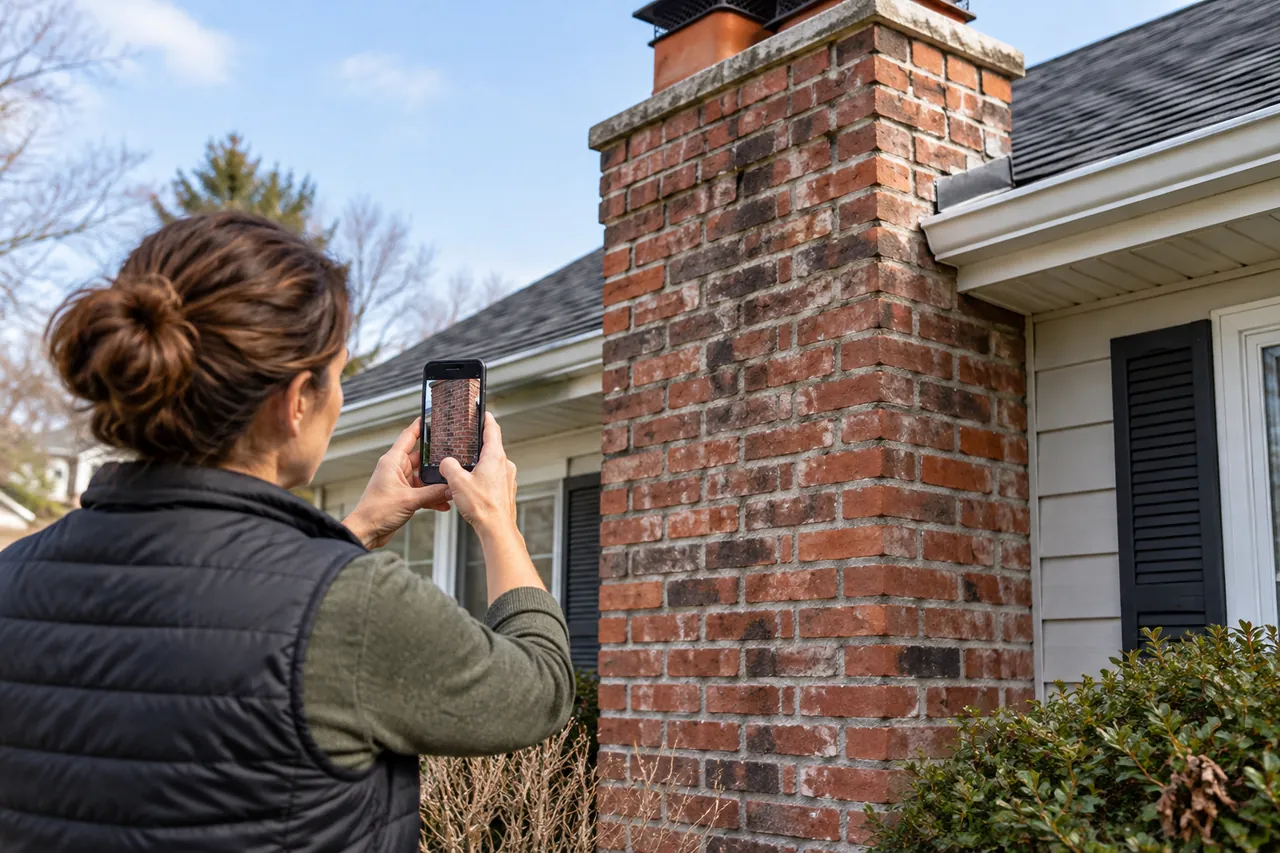
Use an ordinary ground-level view to note what has changed. Photographs taken with a zoom lens can provide context without requiring access to the roof. Include a wider picture showing where the concern sits on the building, not only a tightly cropped patch of brick. Do not climb onto the roof, lean from a window, or try to remove loose pieces. If material appears unstable or has fallen, keep people away from the affected area and seek appropriate professional help.
Describe observations plainly: a missing joint, a broken brick face, staining, or debris found below. Avoid turning those descriptions into a diagnosis of structural condition or safety. The same visible sign can have different causes, and concealed parts of the assembly may need examination. Tell the professional when you noticed the change and whether it followed a storm, repair, or other event. Those details help establish context without implying that the timing alone proves what caused the problem.
Separate the Different Assessment Needs
An exterior masonry repair does not by itself establish that a chimney or connected appliance is safe to use. Ask which aspects the contractor will inspect and which require a qualified chimney or appliance professional. Do not assume that repointing visible joints includes checking internal passages, liners, connections, or operation. If there is a concern about use, obtain appropriate advice before relying on the appliance. Keep the responsibilities for masonry, roofing interfaces, and operational inspection distinct in the project discussion.
Ask whether other specialists need to coordinate before repair work is specified. A visible masonry issue may involve adjacent flashing, roof details, or another component outside a mason’s proposed scope. The assessment should identify those boundaries rather than presenting a surface repair as a complete answer to every chimney concern. If more investigation is needed, discuss how the findings will be shared and who will make the next recommendation. Avoid authorizing cosmetic work merely to conceal a visible symptom before that review occurs.
Understand the Proposed Masonry Work
Request a description of the repair locations and materials. Repointing joints, replacing damaged units, repairing a cap, and rebuilding a section are different tasks. Ask why the recommended scope suits the observed condition and what uncertainties remain until access is established. The proposal should explain how additional findings will be documented and approved. Material compatibility and the appearance of the repaired area also deserve discussion, especially where the existing brickwork is older or has already received several different repairs.
Safe access is part of the work, not an optional detail to improvise later. Ask how the contractor will arrange access and protect the areas below, without attempting to direct their equipment or methods yourself. Explain site constraints such as narrow passages, landscaping, or shared access. Determine what needs to be moved and whether household routes will be restricted. If a neighboring property is involved, permissions and arrangements should be resolved through the appropriate parties before equipment arrives.
Keep a Clear Completion Record
At handover, request photographs or a description of work that cannot be viewed safely from the ground. Compare the completed tasks with the agreed scope and note any recommendations for separate follow-up. Do not interpret a repaired exterior as evidence that unrelated inspections have been completed. Keep reports from the different professionals together so future maintenance decisions are based on a coherent record rather than disconnected invoices or assumptions about what another contractor checked.
Ask how to report later changes and what routine observation or maintenance guidance applies. Continue to view the chimney only from safe locations. If new debris, movement, or another concerning change appears, contact the relevant professional rather than waiting for the next decorative maintenance project. Avoid applying coatings or attempting small repairs at height yourself. The useful homeowner role is to notice, document, and arrange qualified assessment, not to confirm concealed conditions from appearance alone.
Chimney masonry concerns benefit from a cautious, well-defined response. A safe observation, an honest description of what is visible, and a clear division of professional responsibilities are a better starting point than a quick cosmetic fix. Ask what the repair addresses, what it does not establish, and which records you should keep after the work is complete.