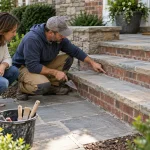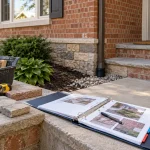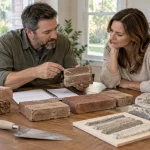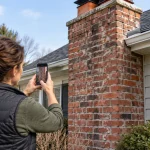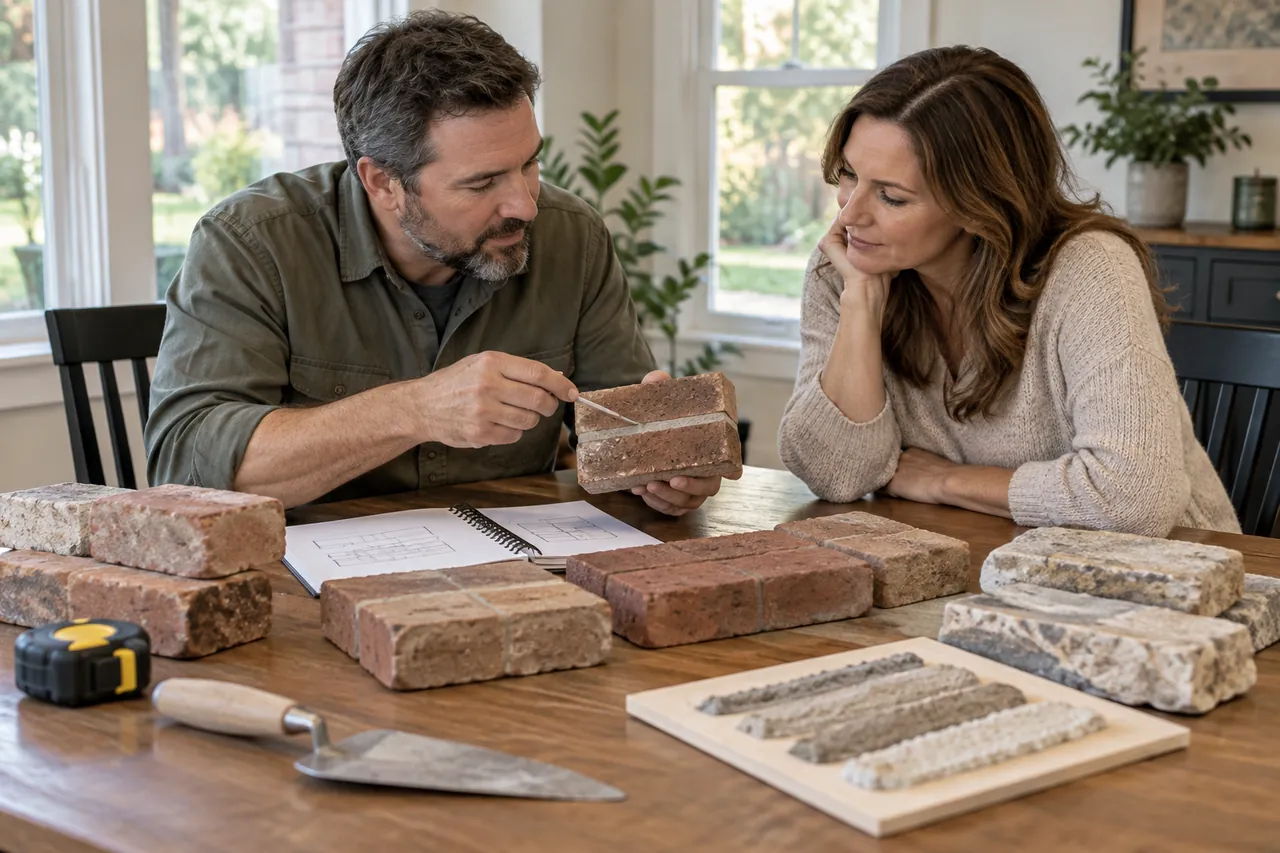
A brick or mortar sample can look convincing indoors and noticeably different beside the existing wall. Light, moisture, texture, and the scale of the sample all affect the comparison. When matching masonry for a repair or addition, allow time to review the proposed materials in the setting where they will be used. The aim is not to promise an invisible result under every condition. It is to establish a realistic, shared reference for the appearance before the larger area of work proceeds.
Compare Several Characteristics Together
Look beyond the dominant color of the brick. Surface texture, size, edge shape, and variation between units contribute to the overall appearance. A sample with a similar red tone may still stand out if its surface is much smoother or its proportions differ. Ask the mason which characteristics are most important for the particular repair and what options are realistically available. Existing materials may no longer be produced in exactly the same form, especially on older buildings.
View several units rather than choosing from one unusually close example. A product range can include meaningful variation, and the completed wall will show the distribution of those differences. Ask how the proposed material will be blended or arranged within the work. If reclaimed units are being considered, discuss their suitability and condition with the contractor instead of assuming that age alone makes them compatible. Appearance is one part of selection, and the material still needs to be appropriate for its intended use.
Review Mortar as Part of the Match
Mortar occupies a significant visual portion of brickwork. Color, joint width, profile, and texture can change the impression of the same brick. Ask to see the proposed combination rather than evaluating each material in isolation. A small dry mortar sample may help start the discussion, but an agreed sample area can reveal how the joint treatment works beside the existing masonry. Material compatibility must also be assessed; choosing a color does not settle the technical suitability of the mortar.
Discuss when the sample should be reviewed. Freshly applied material can look different as it cures and dries, so an immediate judgment may not reflect the intended finished appearance. Ask the mason to explain the appropriate review point for the actual materials and conditions. Record which sample is approved and whether any adjustments are required. If several alternatives are prepared, label them in the project records so the chosen combination is not confused with a rejected option later in the work.
Use the Site’s Normal Lighting
Place or view samples beside the relevant wall where practical and safe. Compare them in ordinary daylight and consider the shade patterns the area normally experiences. A photograph on a phone can change color and contrast, so it should support rather than replace an in-person review when that is possible. Look from the usual viewing distance as well as close range. A repair seen mainly from a walkway may read differently from one directly beside a frequently used doorway.
Consider neighboring materials, including trim, paving, stone, and roof surfaces visible in the same view. A sample that seems acceptable against one isolated brick may look less coordinated within the full elevation. Ask how normal variation in the old wall affects expectations. Weathering, previous repairs, and uneven exposure can make the existing masonry itself inconsistent. The discussion should acknowledge that context instead of treating the building as though it has one perfectly uniform color that a new product can simply duplicate.
Record the Approval and Its Limits
Keep photographs of the approved sample in context, along with product descriptions and notes about the joint finish. Written approval should identify what was selected rather than merely saying the customer liked the color. If the final material supply differs from the reviewed sample, ask to see the difference before installation continues. A clear reference helps both parties discuss changes without relying on memory or a showroom image viewed under unrelated lighting.
Ask what variation should be expected in the completed work and how concerns will be reviewed. Matching a localized repair is not the same as making an entire older wall look newly uniform. Avoid requesting unapproved staining, cleaning, or coating as an automatic way to force a closer appearance after installation. Those treatments need their own suitability assessment. Retain the selection records for future repairs, since they can save time when another section of the same property needs attention.
Thoughtful sample review turns a vague request to match the wall into a documented decision about materials and appearance. Compare the complete combination, use the site’s normal lighting, and allow the proposed sample to reach an appropriate review condition. That process gives the work a clearer visual target while keeping expectations grounded in the character and variation of the existing masonry.